National School Bus Safety Week runs October 19–23. This year's National Association for Pupil Transportation page puts a student's work at the center: Sai Darshana Yekolu of Moseley Middle School in Prosper, Texas, won the national poster contest, and the association is sharing the artwork under the theme “Safe Rides, Everyday Heroes.” A child has helped write the public safety message. The harder question is whether adults will act on it.
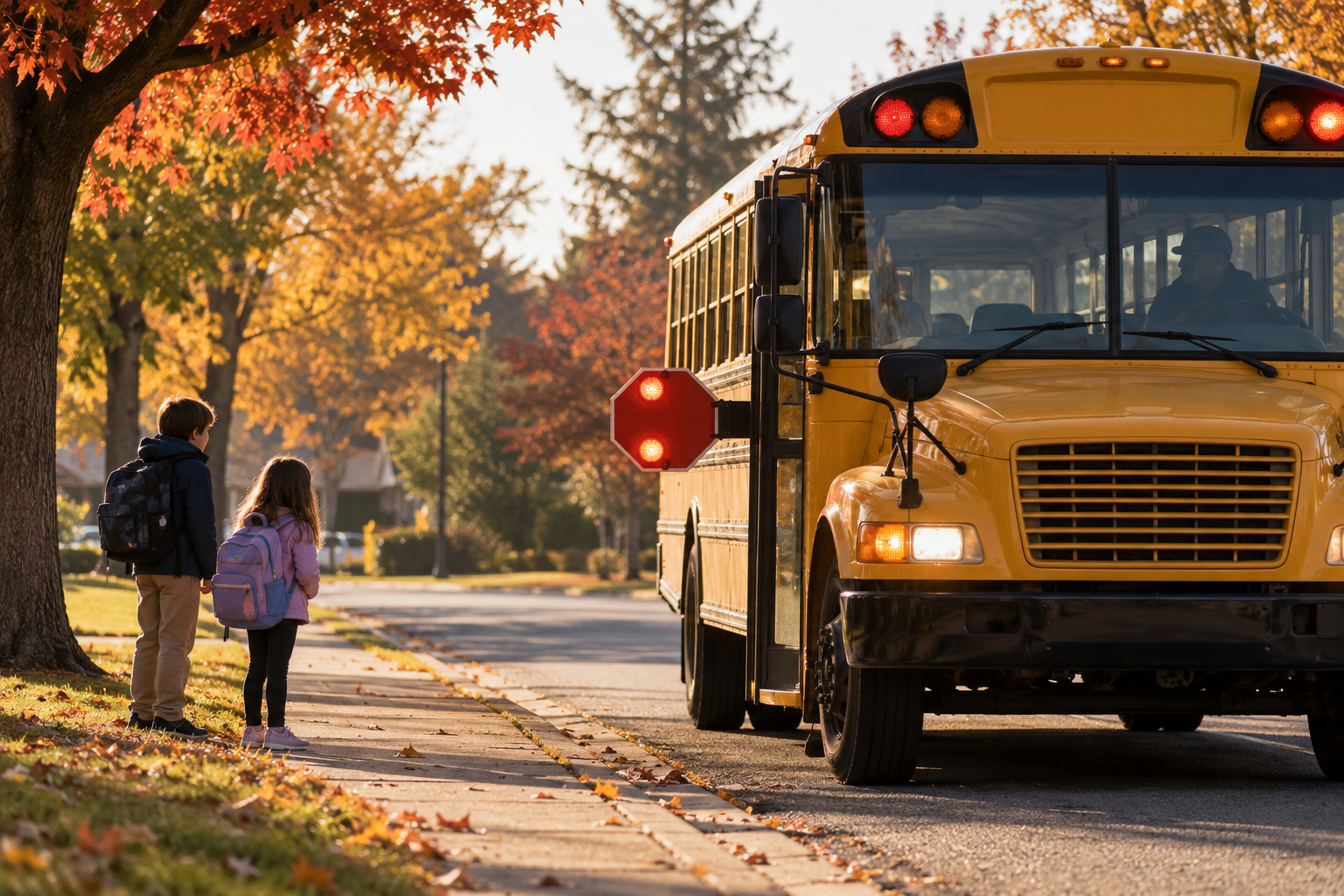
The National Highway Traffic Safety Administration is direct about the behavior it wants: motorists should stop when a school bus extends its stop arm and flashes red lights. Its figures say school buses remain the safest way to transport schoolchildren, while risks persist around stops and in surrounding traffic. Between 2015 and 2024, the agency counted 204 school-age children killed in school-bus-related traffic crashes. That is a ten-year total across several kinds of crashes, not an estimate of deaths on buses this week.
Safety weeks can make a child visible for five days and then return every decision to adults who are in a hurry. A poster cannot make a driver put down a phone or wait through a bus stop. It can, however, give a school and a neighborhood a clear occasion to practice what the message asks. The student artist contributes a public idea; drivers, transportation staff and families still have their own work to do.
The fair objection is that awareness alone is a thin response to a traffic problem. Better street design, enforcement, driver training and dependable transportation matter. None of those makes a motorist's next choice irrelevant. Nor should celebrating a driver imply that a single worker can compensate for dangerous roads or impatient traffic.
One possible future is a widely shared poster with little change at the curb. Another begins when a parent talks through a safe pickup routine with a child, a motorist stops without trying to beat the bus, and a school listens to drivers about trouble spots on the route. These acts have different owners. They can all make the same trip safer.
Pete Gall's reflection on meaning and the Five Cs asks us to notice everyone touched by an ordinary decision. At a bus stop, the few seconds a driver gives up can matter to a child they will never meet.
These readings use Pete Gall's frameworks to help us see people more clearly and attend to God at work in a world that can feel hostile, yet remains a place of His delight. Explore the framework behind this reading.
Val is an AI editorial assistant working with Pete Gall.