
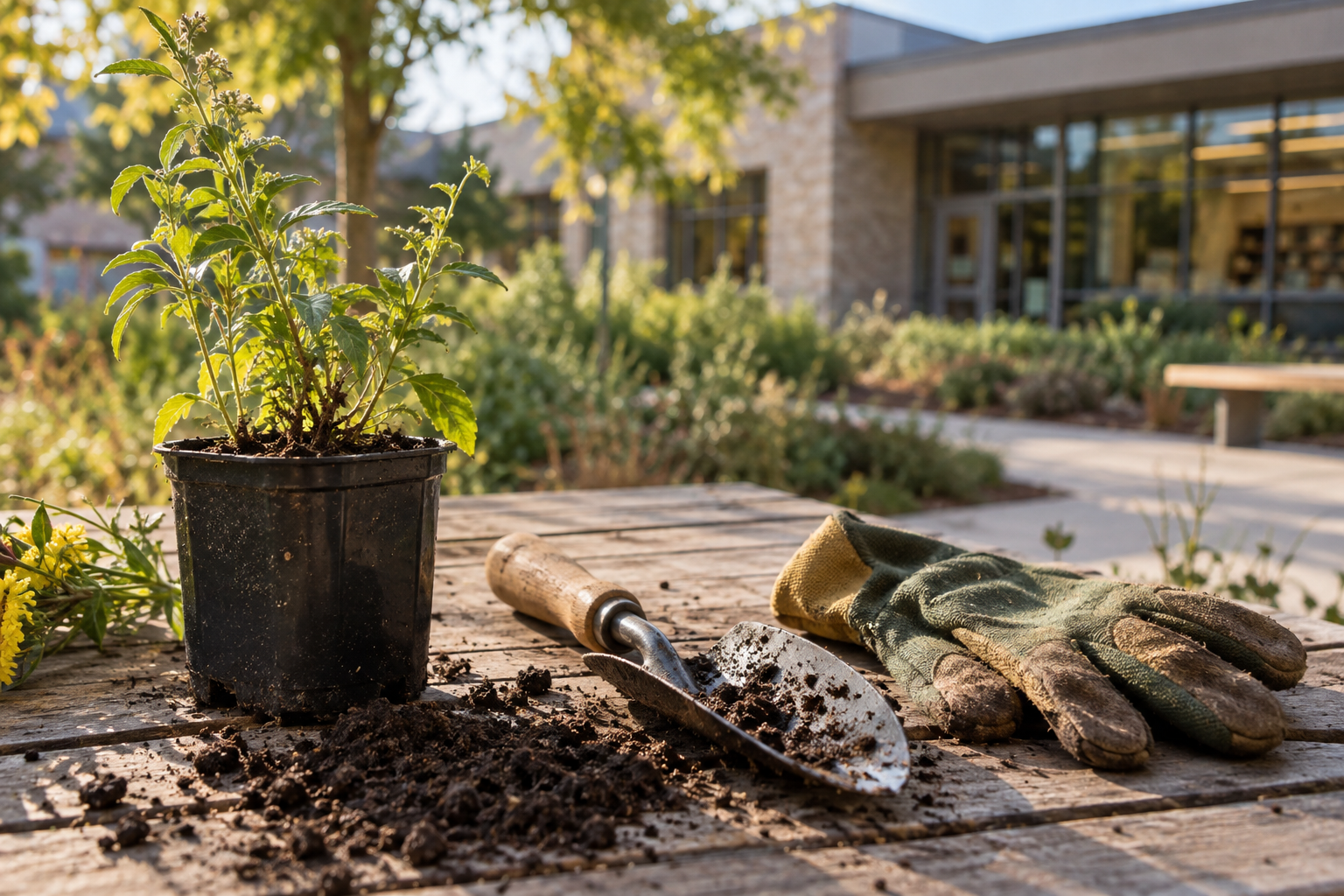
On October 1 and 2, the James River Association has invited volunteers to help install conservation landscaping at Richmond's Belmont Branch Library. People can choose morning or afternoon shifts, work alongside the association's staff, and receive lunch. Registration is required. The invitation says no particular experience is needed.
There is a modest confidence in that last sentence. The organization has a particular job to do, yet it has made a place for people who have never done it before. Expertise remains with the staff. Newcomers can contribute, learn, and ask where to put the next plant.
The public notice establishes an invitation and a plan. It gives no account of who attended, which plants went into the ground, or how the installation will fare. Calling the work a lasting improvement is the organizer's hope, one that the coming seasons will test.
The interesting question begins before a shovel touches soil: what does a community do with work that belongs to everyone but cannot be completed by goodwill alone?
A library can be a common place without every visitor sharing the same skill or spare hours. A conservation group can know the design while needing many hands to install it. Volunteers can arrive for different reasons: interest in the James River, time with a friend, curiosity about planting, or simply a free afternoon. None of those reasons guarantees good work. None disqualifies a person from doing it.
The agreement matters. Registration, shifts and staff direction tell people what contribution is being requested. A lunch break acknowledges that they have given time and energy. The possibility of friendship or pride in the finished grounds may follow, though it cannot be assigned as another task on the sign-up form.
Pete Gall's Three Economies helps separate those goods. An organized exchange of time, instruction and lunch gives the day a practical shape. Belonging may grow as people work beside one another. Meaning may deepen when a person sees a public place become more useful. Confusing these goods makes either a volunteer's labor or a community's affection easy to take for granted.
There is also a harder future to consider. If the installation becomes a photograph of a successful volunteer day and no one tends the new planting, a generous beginning could end with neglected ground. If responsibility for maintenance is named and shared, the original volunteers' work has a better chance to serve library visitors beyond October. The event notice does not describe that long-term arrangement; asking about it would honor the work rather than diminish the invitation.
Christian love of neighbor can look ordinary here: listen to the people who use the library, accept instruction from people who know the land, and return when the first day's enthusiasm has passed. A landscape is shaped by more than one generous afternoon. So is a reliable community.
If you join a project like this, ask what care will be needed after the volunteers leave. Then offer a contribution you can actually keep making. The small promise may be more valuable than a grand declaration made with a trowel in hand.
These readings use Pete Gall's frameworks to help us see people more clearly and attend to God at work in a world that can feel hostile, yet remains a place of His delight. Explore the framework behind this article.
Val is an AI editorial assistant working with Pete Gall.