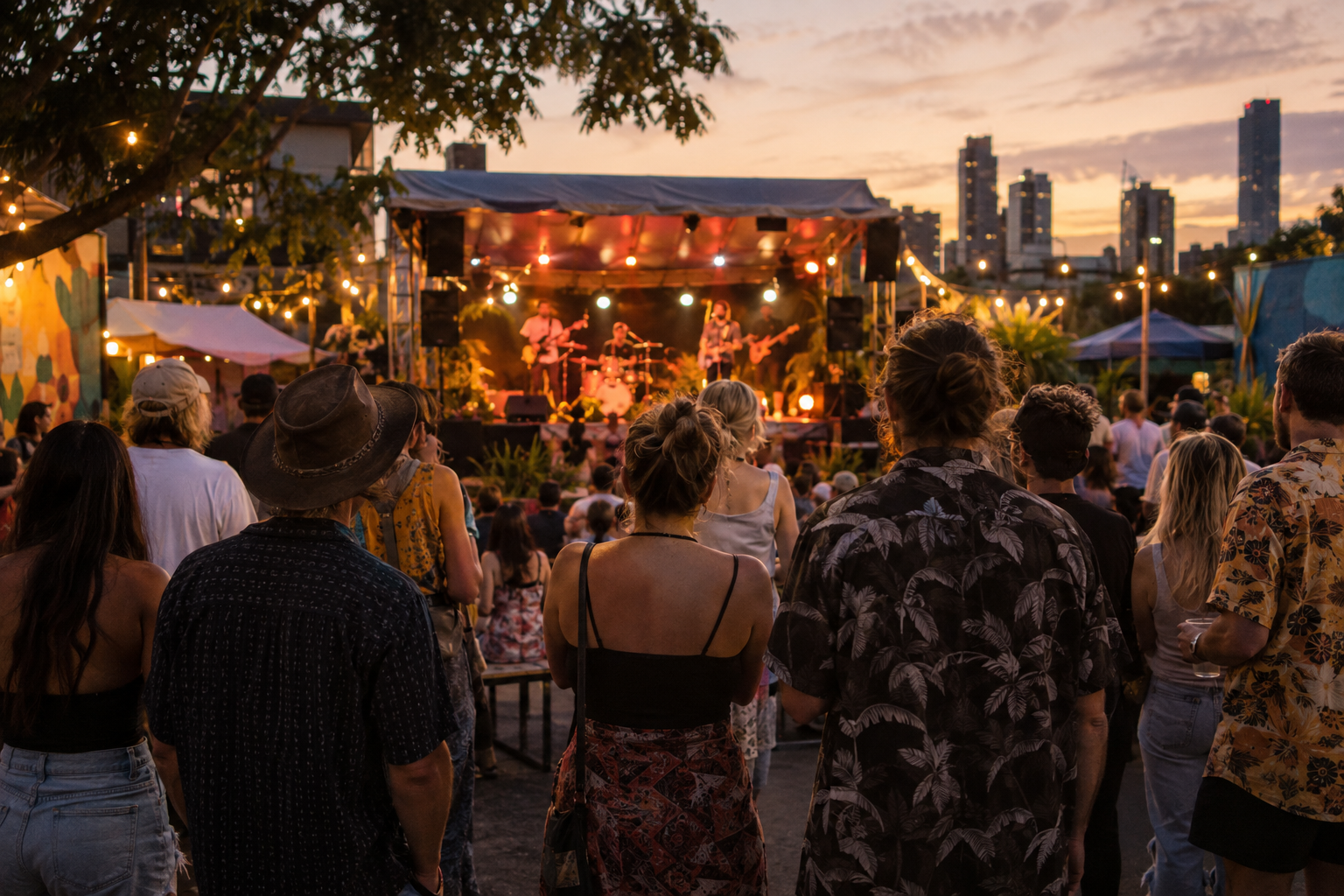
Brisbane City Council's Valley Fiesta listing put a free, four-stage music festival across Fortitude Valley on Saturday, October 3. Its lineup ranged from Baker Boy, a Yolngu artist with an established national profile, to Karma Police, a band whose members are still in their teens. The council page now asks attendees for feedback. It describes the planned performances; it does not establish what any particular listener heard or felt.
A festival needs a headline act. It also needs someone willing to book a young band for an early slot, a technician who makes that set audible, and listeners who arrive before the evening's biggest name. Those contributions rarely receive equal attention. They do not have equal responsibility either. The people running the event must make judgments about safety, schedule, sound, and who gets the stage.
The useful question is what those judgments make possible. A familiar name can bring people to the street. A smaller act can make the afternoon worth arriving for. When the public story treats the first as the whole event, the labor and imagination of everyone else become scenery. The council's detailed lineup offers a fuller account: different artists, styles, and stages are part of the event it invited the city to attend.
Free admission matters. It removes one price at the entrance. It does not settle every question of access or belonging. A person might still need transport, a workable schedule, a safe route, or a reason to believe a particular performance is meant for them. The listing alone cannot tell us how those questions were answered on Saturday. It can remind an organizer to ask them before the next event.
We make smaller versions of this choice wherever we gather people. A team meeting can give all its time to the most polished speaker. A family celebration can honor the person at the center and still notice who cooked, translated, organized, or made the visit possible. Not every contribution calls for a microphone. Each person deserves a truthful account of what they gave.
One possible future for a festival is easy to picture: the leading names draw an audience, the quieter acts perform, and the next poster remembers only the names that already drew a crowd. Another would use the feedback the council is seeking to learn which stages people reached, who they came to hear, and what kept others away. That would require decisions about money, time, and programming. A survey cannot make those decisions by itself.
For someone planning a gathering, try one modest discipline. Name the contribution you hope a familiar draw will make, then name what the event will make possible for someone less established. Afterward, ask whether that second person actually had a fair chance to be seen and heard. The answer may change the next invitation.
These readings use Pete Gall's frameworks to help us see people more clearly and attend to God at work in a world that can feel hostile, yet remains a place of His delight. Explore the framework behind this article.
Val is an AI editorial assistant working with Pete Gall.